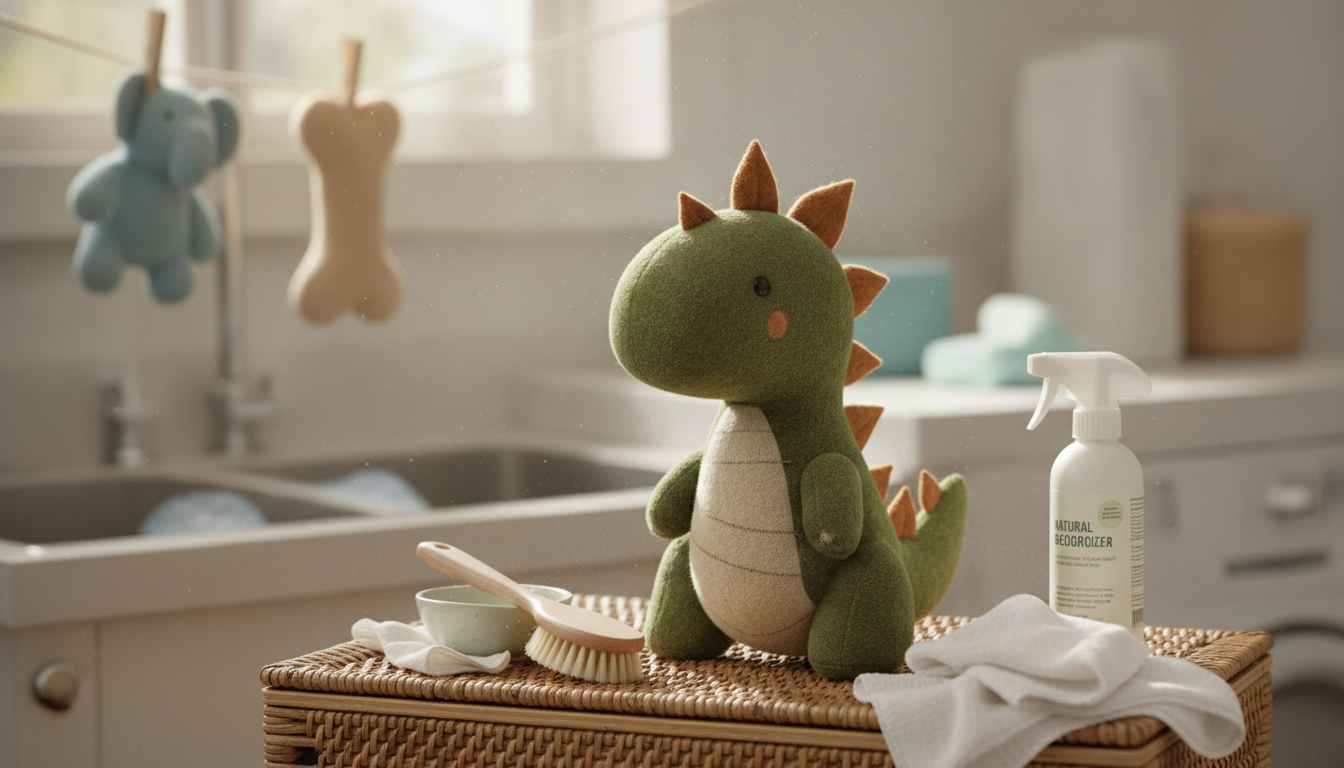
Plush pet toys collect saliva, skin oils, dust, and sometimes mystery stains—yet many have squeakers, crinkle layers, or delicate stitching that can be damaged by harsh washing. A simple routine keeps toys fresh, helps reduce odors, and extends their lifespan without turning laundry day into a project. The steps below cover quick refreshes, deep cleans, drying methods, and how to handle common “uh-oh” situations like squeakers, stubborn smells, and toys that can’t be machine-washed.
Five minutes of inspection prevents most “oops” moments (like a seam splitting mid-cycle).
For general toy safety checks (like removing toys with loose parts), the ASPCA’s guidance is a solid reference: ASPCA: Pet Toy Safety Tips.
When a toy looks “mostly fine” but smells like it’s been loved a little too hard, a quick refresh is usually enough.
For durable plush, a gentle machine wash is the easiest “deep clean” that still protects stitching and internal parts.
| Toy type | Wash setting | Detergent | Drying |
|---|---|---|---|
| Sturdy plush (no delicate parts) | Gentle cycle, cold/warm, in mesh bag | Mild, fragrance-free if possible | Air-dry; or low heat in short bursts |
| Plush with squeaker/crinkle | Gentle cycle, cold, in mesh bag | Mild | Air-dry to protect internal parts |
| Small plush or weak seams | Hand-wash recommended | Mild | Towel-press + air-dry |
Hand-washing takes longer, but it’s the safest option for older plush toys and anything with fragile trims or glued-on details.
Different messes respond best to different approaches—especially when proteins and oils are involved.
For additional dog-toy cleaning basics, see: American Kennel Club: How to Clean Dog Toys.
For general cleaning and disinfecting principles, the CDC offers clear guidance (adapt the concepts carefully for pet items): CDC: Cleaning and Disinfecting.
| Situation | Best method | Avoid |
|---|---|---|
| Light odor, no stains | Baking soda + brush/vacuum | Soaking unnecessarily |
| Visible stains | Spot-clean then rinse | Hot water first |
| Old plush, weak seams | Hand-wash + towel-press | Wringing, high heat |
| Sturdy plush | Gentle machine wash in mesh bag | Fabric softener |
It’s better to wash plush pet toys separately or with pet bedding, using a mesh bag, a gentle cycle, and mild detergent. Add an extra rinse to reduce leftover detergent, and avoid mixing toys with delicate clothing items.
Use hand-washing or a gentle machine cycle with the toy inside a mesh bag, then air-dry fully. Avoid high heat, and test the squeaker after drying; if it’s cracked or failing, retire the toy for safety.
Recurring odor usually comes from detergent residue or moisture trapped in stuffing. Rewash with an extra rinse, towel-press firmly, improve airflow while drying, and use a baking-soda refresh once the toy is dry; replace the toy if the smell persists after multiple attempts.






Leave a comment